


Before the Cloud Comes Down
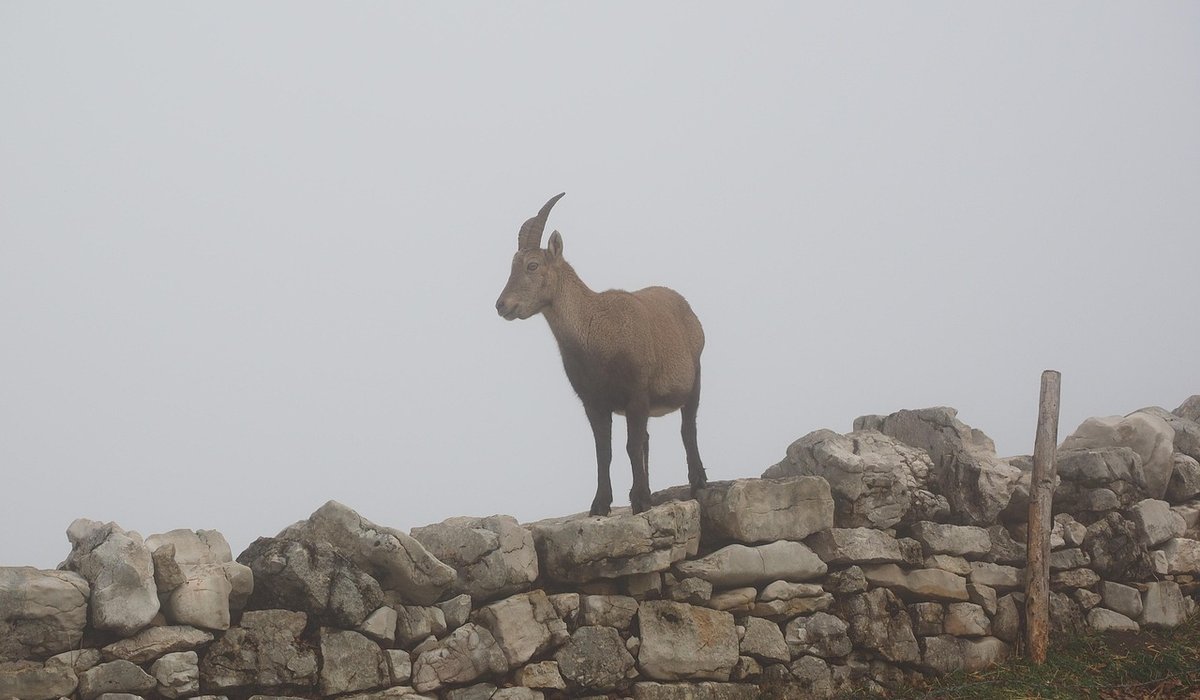
Moorland in mist is a different country. The path that ran so obviously beside the grouse butts an hour ago simply stops existing at fifteen metres, and the horizon folds in until your world is a damp grey circle of heather and gritstone. This is not a reason to stay home — some of the finest days out are had in cloud — but it is a reason to navigate deliberately rather than hopefully.
The best time to practise is on a clear day. If you can see where you are, you can check whether your bearing was accurate and whether your pacing was honest. Do that a few times in sunshine and the same skills will carry you comfortably through the murk. Before you set off, note the grid magnetic angle printed in the map margin and set it on your compass; in northern England it is small, but small errors over long legs on featureless moor add up. Carry a 1:25,000 map for the tricky bits and a 1:50,000 for the broad picture, keep both in a clear case, and put the compass on a lanyard round your neck so it cannot be dropped into a peat hag.
Bearings That Actually Work
A raw bearing from A to B is a starting point, not a plan. The trick is to build in a safety net before you walk a single step.
- Aim off deliberately — instead of aiming at a small target such as a stile or a spring, aim a few hundred metres to one side of it, then follow the obvious handrail back. You will know which way to turn when you hit it.
- Find a catching feature beyond your target: a wall, a stream, a road, a forestry edge. If you overshoot, the ground itself will tell you.
- Break the leg at an attack point — a boulder, a cairn, a bend in a beck — and take a fresh bearing from there for the final short hop.
- Take a back bearing on anything distinctive you pass, and use it to confirm you are still on line when you glance behind you.
Hold the compass flat and level, keep the needle settled, and line the direction-of-travel arrow up with your body before you move. Then pick a feature — a rock, a tussock, a patch of bare peat — on that line a few metres ahead, walk to it, and repeat. Walking on a distant object that vanishes in mist is how people drift.
Counting Your Way Through the Grey
Pacing is the quiet skill that saves the day. Count every time your left foot lands: that is one double pace. On level, firm ground most adults cover 100 metres in around 60 to 65 double paces; on tussocky moorland, deep heather or bog, expect 75 or more. Calibrate yourself on a measured stretch of road or track near home and you will have a figure you can trust.
Use a tally counter, a knot of cord, or pebbles moved between pockets — counting silently to 400 while also watching your feet and the weather is asking for trouble. Combine pacing with timing as a cross-check: on rough moor in poor visibility, a realistic pace is 2 to 3 kilometres per hour, slower still uphill or into a wet headwind. If your pacing and your watch disagree wildly, stop and work out why before you go on.
Reading Ground and Map Together
Contours are your best friend when the view has gone. A re-entrant, a spur, a rounded summit, a line of groughs — these shapes are visible underfoot even when nothing else is. Learn to feel the ground rising or falling and match it to the map.
- Walk feature to feature: wall to cairn, cairn to stream junction, junction to boundary stone. Tick each one off as you pass.
- Use handrails — walls, fences, becks, ridgelines — to carry you along a leg rather than fighting across open moor on a bare bearing.
- Watch for sheep tracks and worn peat; they often follow the natural line of travel and can confirm you are on a sane route.
- Treat streams and bogs as confirmation, not convenience. Water flows downhill, and it will tell you which side of a spur you are on.
Keeping the Party Together
Mist splits groups without anyone noticing. Nominate a back marker, count heads at every stop, and never let the fastest walker set a pace that strings the group out of sight. If someone needs to stop, everyone stops. Carry a whistle and agree the distress signal — six blasts, repeated — before you leave the car park. A bothy bag or group shelter, spare layers, a head torch and a hot flask are not luxuries on a northern moor; they are what turns an uncomfortable hour into a manageable one.
Set a turnaround time and stick to it. Cloud that has not lifted by early afternoon often thickens rather than clears, and a shorter day out is always better than a long one that ends in the dark.
Sharpening the Skill in Fair Weather
Navigation in mist is not a separate discipline — it is the same craft you use on a sunny day, just with fewer confirmations from the view. So on clear days, take bearings anyway. Pace between features and check your figures. Practise aiming off. Learn the shape of your local moor until you could sketch it from memory.
Do that, and the next time the cloud rolls in across the tops, you will feel the familiar tightening of the world around you and simply carry on — compass in hand, counting under your breath, quietly confident that the stile, the cairn or the car park will appear exactly where you said it would.


Leave a reply